- whatsapp chatbot
- bot
- automation
- artificial intelligence
- customer service
WhatsApp Chatbot: Complete Guide for Businesses
Everything about WhatsApp chatbots for business: bot types, use cases, setup requirements, AI vs rule-based comparison, and how to measure ROI.

Contents
A WhatsApp chatbot is a program that automatically responds to messages in a WhatsApp Business conversation. It can be as simple as a fixed menu of numbered options or as sophisticated as an AI assistant that understands natural language and executes operations in your backend systems.
In 2026, 67% of consumers globally prefer resolving issues via messaging over calling a support line (source: Zendesk CX Trends). In markets where WhatsApp dominates daily communication, not having a bot means forcing customers to wait in queue when they could get an immediate answer.
This guide covers the types of chatbot available, when each one makes sense, what you need to set one up, and what results to expect.
Table of contents
- Types of WhatsApp chatbot
- Most common use cases
- Rule-based bot vs AI bot
- What you need to implement one
- How to measure chatbot ROI
- Common mistakes
- Conclusion
Types of WhatsApp chatbot
There are three general categories, and most production implementations combine elements of more than one.
Menu bot (keyword/flow)
The most basic type. The user sees numbered options or buttons, picks one, and the bot responds with fixed information or sends them to another menu level.
Example:
Bot: Hi, how can I help?
1. Check balance
2. Report an issue
3. Talk to an agent

User: 1
Bot: Your balance as of today is $127.50. Due date: May 15.
Pros: predictable, easy to build, no made-up answers (it only says what you configured). Cons: rigid, frustrating if the user wants something outside the menu.
Rule-based bot with flows (deterministic)
A step above the menu bot. This type follows decision-tree flows: asks the user for data (name, account number, etc.), validates responses, calls external APIs to look up information, and responds with real data.
It can query balances in your ERP, generate payment references, create support tickets, verify user identity, and hand off to a human agent when needed. The difference from a menu bot is that this one executes business logic, not just displays static text.
AI-powered bot (generative)
Uses a language model (GPT-4, Claude, Gemini, etc.) to understand what the user writes in natural language and generate responses. Can combine knowledge from a database (RAG) with the ability to execute actions (tool calling).
Pros: understands language variations, handles off-script questions, natural conversational experience. Cons: can hallucinate (invent information), requires careful guardrails, more expensive per token.
Hybrid (the practical choice for production)
Most serious deployments use a hybrid approach: AI to classify the user’s intent and extract data, but deterministic logic to execute actions and respond with transactional data.
Example: the user writes “how much do I owe, my service is 44513”. The AI classifies the intent as “check-balance” and extracts the service number. But the system query, identity verification, and response with the actual amount are handled by deterministic flows that cannot make mistakes.
Most common use cases
Based on real implementations across businesses:
| Use case | Industry | Typical containment |
|---|---|---|
| Balance/account status inquiry | Telecom, utilities | 80-90% |
| Payment reference generation | Financial services, utilities | 85-95% |
| Order tracking | E-commerce, logistics | 70-80% |
| Appointment scheduling | Healthcare, government | 60-75% |
| Level 1 tech support | Telecom, SaaS | 50-65% |
| FAQ | Any | 75-85% |
| Incident/fault reporting | Telecom, utilities | 70-80% |
| Satisfaction surveys | Any | 85-90% |
“Containment” means the percentage of conversations the bot resolves without needing a human agent. It is the key metric for calculating ROI.
Rule-based bot vs AI bot
This is the most important decision when implementing a chatbot.
| Aspect | Rule-based | AI-powered |
|---|---|---|
| Accuracy on transactional data | Copies the data from your system | Can hallucinate or rephrase |
| Conversational flexibility | Low (only understands expected inputs) | High (understands variations) |
| Operating cost | Low (no token consumption) | Medium-high ($0.01-0.05 per turn) |
| Setup time | 1-2 weeks | 2-4 weeks |
| Maintenance | Manual (add new rules) | Lower (but needs monitoring) |
| Edge case handling | Poor (fails silently) | Good (attempts to resolve) |
| Risk of incorrect response | None | Exists (mitigable with guardrails) |
Practical recommendation: if your primary use case is transactional (lookups, payments, tickets), use a hybrid with AI classification and deterministic execution. If your use case is informational (FAQ, knowledge base), generative AI works well on its own.
What you need to implement one
Minimum infrastructure: WhatsApp Business API (verified number, approved templates), an inbox/chatbot platform (CX Inbox, Respond.io, Twilio, or similar), and APIs to your internal systems (ERP, CRM, ticketing) if the bot needs to look up data.
For a rule-based bot: a decision flow mapping (what it asks, what it validates, what it queries, what it responds), entity definitions to collect (name, account number, etc.), and error messages plus fallback flows for when it does not understand.
For an AI bot: everything above, plus an LLM provider (OpenAI, Anthropic, Google, or local model), a well-designed system prompt (personality, boundaries, instructions), a knowledge base (documents, FAQ) if using RAG, and guardrails including content filters, data validation, and automatic escalation.
Realistic implementation timeline:
- Simple menu bot: 2-3 days
- Bot with flows and APIs: 1-3 weeks
- Hybrid bot with AI: 2-4 weeks
- Enterprise bot (multi-language, multi-channel, analytics): 1-3 months
How to measure chatbot ROI
Containment rate. Percentage of conversations resolved without a human agent. If your bot contains 70% of conversations and your support team costs $5,000 USD/month, the direct savings are $3,500 USD/month.
First response time. With a bot: under 5 seconds, 24/7. Without a bot: depends on working hours and agent load. The difference in customer satisfaction is measurable via CSAT scores.
Cost per interaction. Rule-based bot: ~$0.001 per turn (infrastructure only). AI bot: $0.01-0.05 per turn (tokens). Human agent: $0.50-2.00 per interaction (salary + overhead). Even the most expensive AI bot is 10-50x cheaper than a human agent.
Post-bot CSAT. Satisfaction survey after bot interaction. Above 4.0/5.0 means your bot is working well. Below 3.5 means it needs tuning.
Unnecessary escalation rate. Conversations that reach an agent but could have been resolved by the bot. If this number is high, your bot needs more flows or better classification.
Common mistakes
Not defining scope. Trying to make the bot do everything from day one leads to a mediocre experience across the board. Start with 2-3 well-covered use cases and expand gradually.
Ignoring handoff. A bot that cannot transfer to a human agent frustrates users. Always have a clear, fast escape route.
Not monitoring conversations. Many bots get launched and forgotten. Without periodic review of bot conversations, problems accumulate unseen.
System prompt too long. Prompts of 5,000+ words confuse the model. Be concise and specific.
Not validating data before responding. If your bot queries an API and the API fails, the bot should say “I could not look up your information, let me connect you with an agent” instead of inventing a number.
Conclusion
A well-implemented WhatsApp chatbot does not replace your support team. It handles the repetitive queries (typically 80% of volume) so your agents can focus on cases that genuinely need human attention.
The key is choosing the right type of bot for your use case, implementing it with proper guardrails, and measuring constantly. A hybrid bot (AI to understand, rules to execute) hits the sweet spot for most businesses.
If you want to see this in practice, CX Inbox combines AI classification, deterministic flows, and a shared inbox for cases that need an agent. But the important thing is to start: define your top 2-3 flows, measure them, and iterate.
Related articles
-
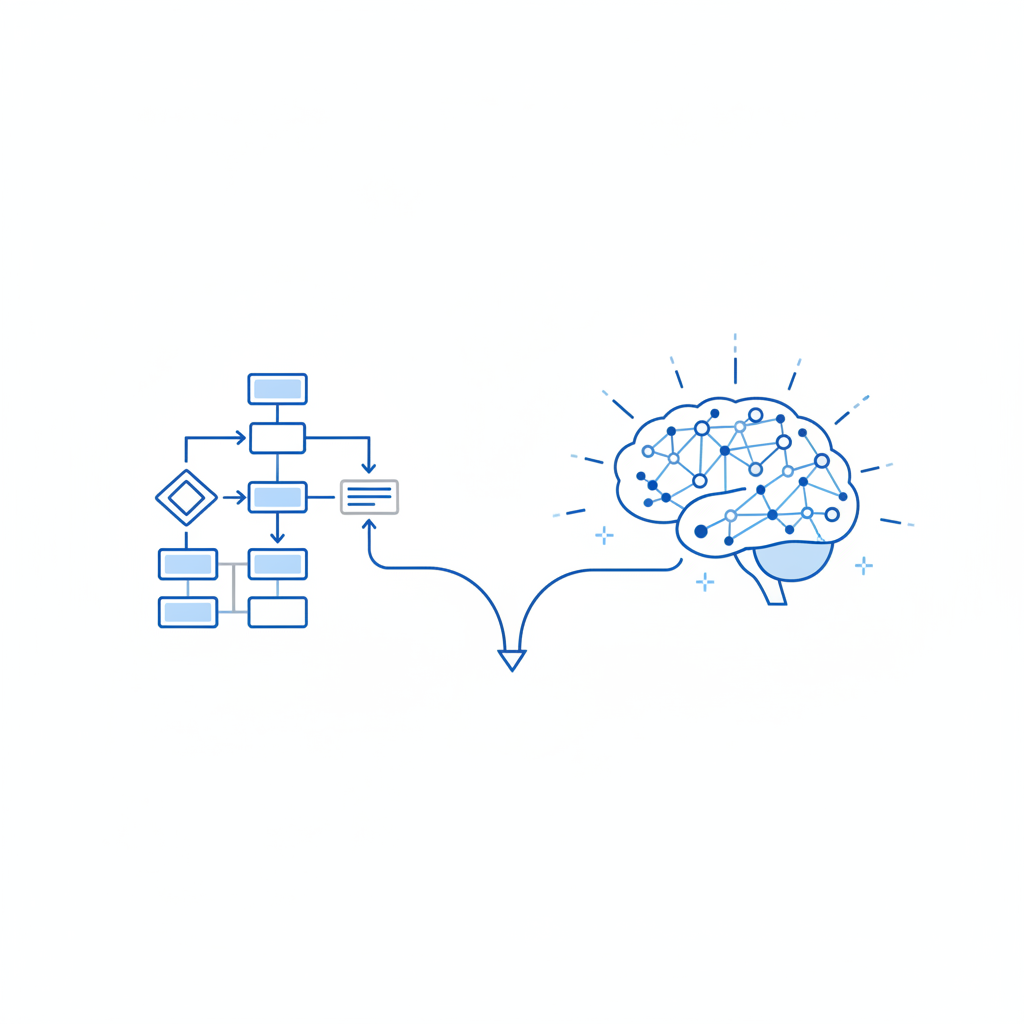
WhatsApp Bots: Deterministic Flows or Generative AI? When to Use Each
Practical comparison between flow-based (deterministic) bots and generative AI bots for WhatsApp. Advantages, use cases and the hybrid approach.
10 min read -
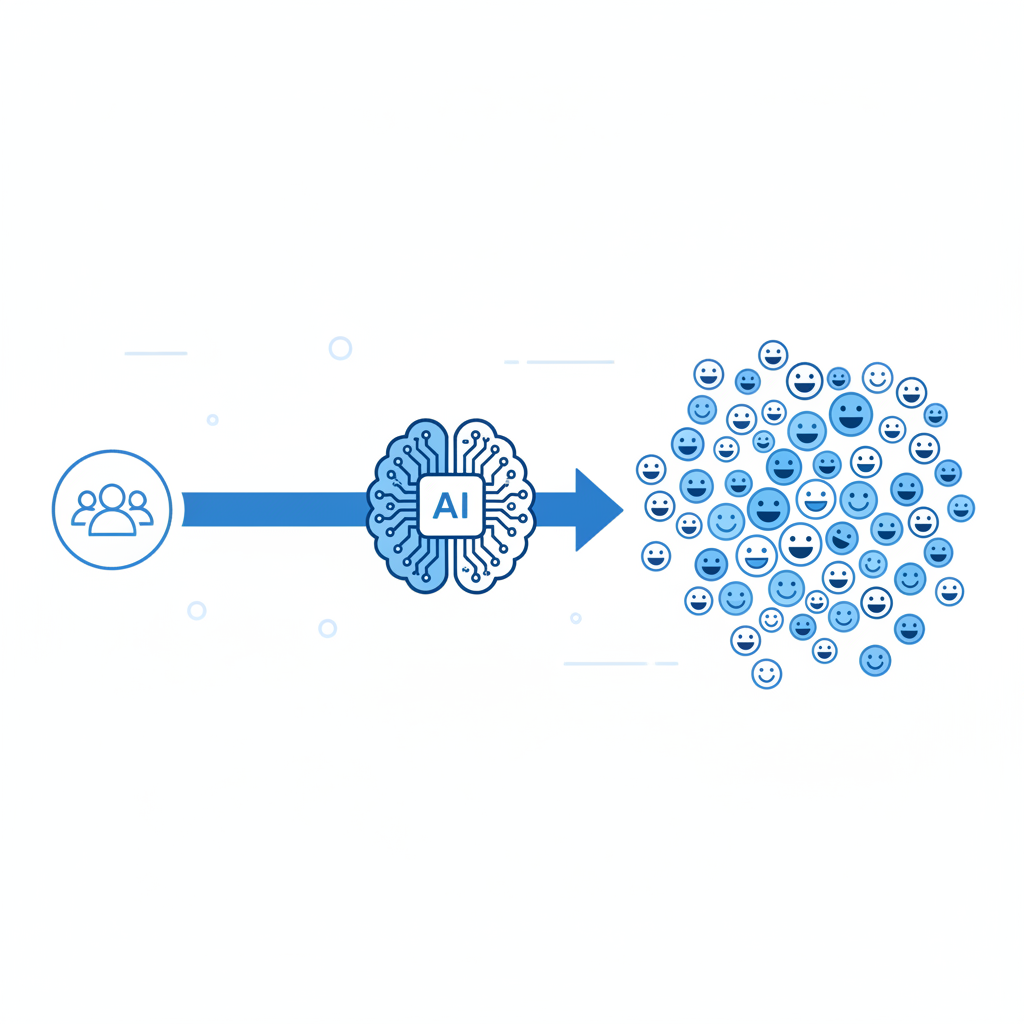
How to scale customer support with AI without losing the human touch
A practical framework for implementing AI in customer support: three automation levels, ROI math, common pitfalls, and the hybrid model that actually works.
9 min read -
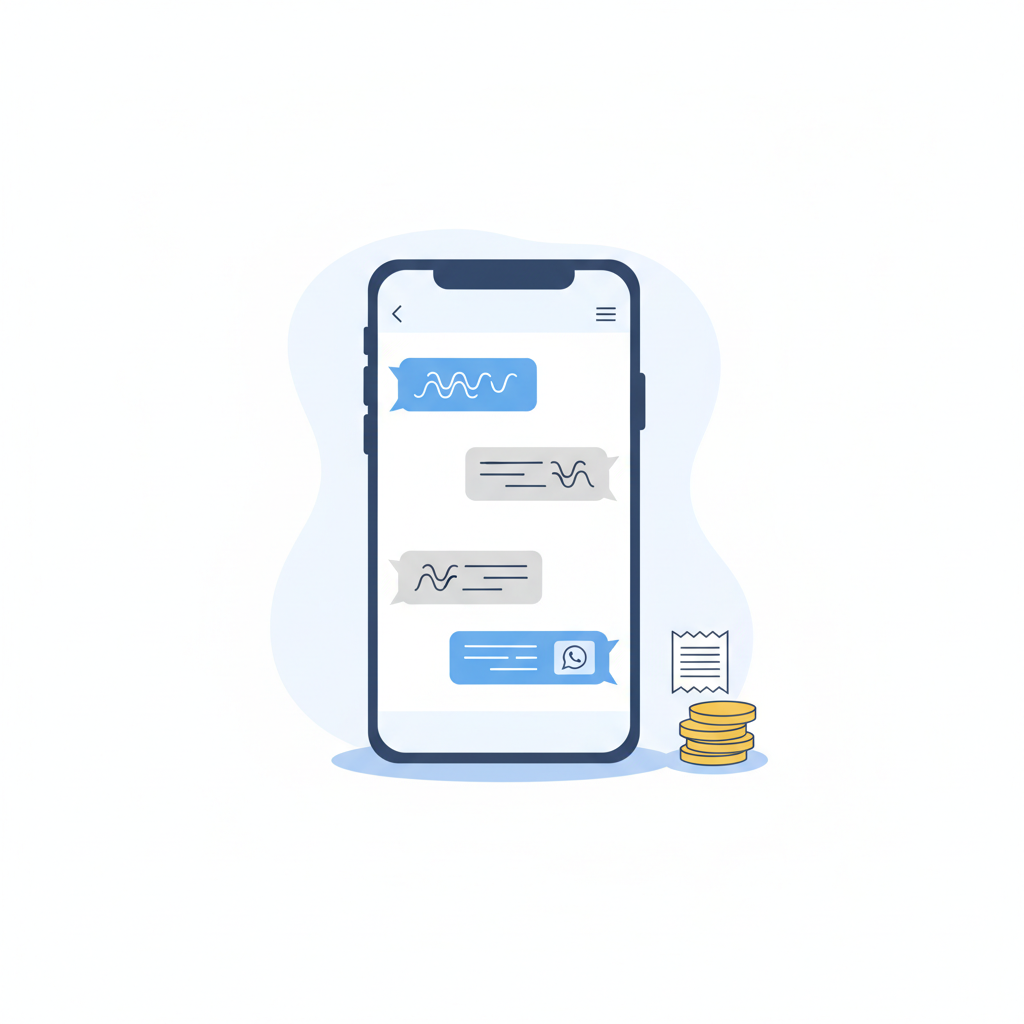
How to Automate Collections via WhatsApp (Step-by-Step Guide)
Practical guide to automating payment reminders, balance inquiries and payment reference generation via WhatsApp Business API with a transactional bot.
8 min read


Design this bot free — no code
Pick a template, customize it by answering questions, and test it in a live WhatsApp preview. No account, no card.

